
Snake Proof Boots: Do They Really Work? The Complete 2026 Guide
Snake proof boots are one of the most misunderstood pieces of outdoor safety gear. This guide explains exactly how they work, what materials actually stop a fang, the difference between snake proof and snake resistant, and who genuinely needs them — so you can make an informed decision before you spend anything.
Last updated Verified every product link and image against its listing; removed unsourced statistics
What Are Snake Proof Boots?
Snake proof boots — also called snake resistant boots, snake protection boots, or anti snake boots — are specialized footwear engineered with a dedicated snake guard layer that prevents venomous fangs from reaching your skin.
The critical distinction from regular boots: snake proof boots are purpose-built and tested specifically for fang resistance. A standard leather work boot or hiking boot may slow a strike, but only a boot with a rated snake guard provides reliable protection against the full force of a rattlesnake, copperhead, or cottonmouth bite.
The snake guard is typically made from 1000D nylon, Cordura ballistic fabric, polycarbonate panels, or thick rubber — materials dense enough that a fang physically cannot penetrate through to the inner lining. This guard runs from the toe to the top of the boot shaft, covering the entire strike zone.
Who Needs Snake Proof Boots?
- Hunters in rattlesnake-dense territory (TX, FL, AZ, OK, GA)
- Ranch workers, farmers, and outdoor laborers
- Wildlife biologists and field researchers
- Hikers in high-risk snake habitats
- Anyone who regularly works in tall grass or dense brush
Ready to see which models are worth buying? See our top-rated options in our Best Snake Boots guide →
Multi-Layer Protection
Outer shell → Snake guard → Waterproof membrane → Comfort lining
Snake Proof vs Regular Boots
The Best Snake-Proof Boots You Can Buy
If you just want the answer: these four are the snake boots we recommend for most people, by use case. All carry a rated snake guard that stops fang penetration.

Danner Men's Sharptail Snake Boot
Full-grain leather and nylon with 360-degree snake guard and a GORE-TEX liner. Resoleable, so it is the one boot here you buy once rather than replace.

LaCrosse Alpha Agility 17" Snake Boot
Rubber construction with LaCrosse Snake Guard, for swamps, marshes and flooded fields. Nothing gets through it — fangs or standing water.
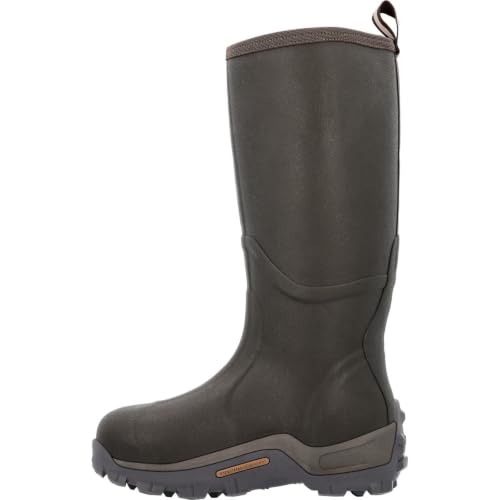
Muck Wetland Pro Snake Strike Boot
One of only three boots Muck certifies as snake resistant. Built for standing in cold water, which is where most rubber boots stop being snake boots.

Rocky Men's Lynx Snake Boot
16 inches of CORDURA snake guard over waterproof construction, at an entry price. Proof that fang protection does not require a premium budget.
How Do Snake Boots Work?
Understanding the physics of a snake strike — and why the right materials make all the difference.
The Physics of a Snake Strike
When a rattlesnake strikes, its fangs are hollow, curved needles — typically 0.5 to 1.5 inches long — driven forward with significant force. The fang tip is extremely sharp and designed to penetrate skin and muscle tissue rapidly, and the strike itself is faster than a person can react to.
The key to snake boot protection is fang penetration resistance — the ability of the boot material to absorb or deflect the fang before it reaches skin. This works through two mechanisms:
Deflection
Tightly woven fabrics like 1000D nylon and Cordura cause the fang tip to slide sideways rather than penetrate straight through. The weave pattern physically redirects the strike force.
Absorption
Thick rubber and polycarbonate panels absorb the strike energy. The fang may penetrate the outer layer but stops before reaching the inner lining — like a bullet stopped by body armor.
Fang Deflection
Snake boot materials redirect fang force away from penetration
Height Protection: Why It Matters
Most venomous snake strikes in the US occur between 6 and 18 inches off the ground — the calf zone. This is why boot height is as critical as material quality.
Minimum — covers ankle and lower calf
Standard — the common recommendation
Recommended for tall grass & dense brush
Maximum — swamp, marsh, and high-risk terrain
Materials That Actually Stop Fangs
1000D Nylon
The industry standard for snake-rated boots. The tight weave causes fangs to deflect rather than penetrate. Anything below 600D is not considered snake-proof.
Cordura Ballistic Fabric
Originally developed for body armor. Woven in a basket pattern that physically redirects fang force. Lighter than Kevlar but nearly as effective.
Polycarbonate Panels
Rigid PC shields inserted between outer shell and inner lining. The fang physically cannot penetrate the panel.
Full-Grain Leather
The densest, most durable part of the hide. Provides natural puncture resistance plus abrasion protection. Requires conditioning but outlasts synthetics.
100% Rubber
Thick rubber construction (not thin rain boot rubber) physically stops fang penetration. Best for wet environments. LaCrosse Venom II Wellington is the benchmark.
Multi-Layer Systems
The best boots combine 3–5 layers: outer shell → snake guard → waterproof membrane → insulation → comfort lining. Each layer serves a specific function.
Can Snakes Bite Through Boots?
The honest answer depends entirely on what kind of boot you're wearing.
Regular Leather Boots
NOT PROTECTEDStandard leather work boots or hiking boots offer minimal protection. The leather may slow a strike, but a determined rattlesnake can penetrate thin leather, especially at seams or flex points.
Examples:
Standard Rubber Boots
NOT PROTECTEDThin rubber rain boots or muck boots without a rated snake guard are NOT snake proof. The rubber is too thin and flexible to stop a fang. Only thick, purpose-built rubber snake boots provide protection.
Examples:
Rated Snake Boots
PROTECTEDPurpose-built snake boots with a rated snake guard (1000D nylon, Cordura, polycarbonate, or thick rubber) provide reliable protection. Manufacturers publish puncture-resistance ratings for these models — CrackShot, for instance, states its guards are tested to ASTM F1342-05.
Examples:
Key Takeaway
The only boots that reliably stop snake bites are those specifically rated and tested for snake protection. A regular leather boot might get lucky, but it's not a guarantee — and in snake country, you need a guarantee.
Are Snake Boots Really Snake Proof?
Setting realistic expectations about what snake boots can and cannot do.
Realistic Expectations
"Snake proof" is a marketing term — the more accurate description is "snake resistant to a tested standard." No boot can guarantee 100% protection in every possible scenario, but quality snake boots come extremely close when used correctly.
Manufacturers test guard materials against simulated fang penetration and publish the standard they test to — ASTM F1342-05 is the one you will see cited most often. A boot that names no standard has not, as far as you can verify, passed one.
What "Snake Proof" Actually Means
- Tested against simulated fang penetration at forces exceeding real strikes
- Materials rated to stop fangs from reaching inner lining
- Coverage from toe to top of shaft (14–18 inches)
- Protection when worn correctly with pants tucked in
Known Limitations
Coverage Gaps
High RiskIf pants are not tucked into the boot, a strike to the gap between boot top and pants can reach skin. Always tuck pants into boots.
Worn or Damaged Boots
Moderate RiskA boot with a tear, worn-through snake guard layer, or compromised waterproof membrane may not provide full protection. Inspect boots regularly.
Extreme Strike Angles
Low RiskWhile rare, a strike at an extreme angle might find a gap at the ankle flex point. Quality boots minimize this with overlapping protection layers.
Very Large Snakes
Low RiskExceptionally large rattlesnakes (5+ feet) have longer fangs and more powerful strikes. 18-inch boots are recommended in areas with large snakes.
The Bottom Line
Quality snake boots from reputable manufacturers (Danner, LaCrosse, Rocky, Irish Setter, Muck) provide reliable protection against venomous snake bites in real-world field conditions. They are not invincible, but they reduce your risk from "likely" to "extremely unlikely" — which is exactly what you need in snake country.
Snake Boots vs Snake Gaiters
Both provide protection — the right choice depends on your use case, budget, and existing footwear.
Snake Boots
All-in-one protection
- Full foot and leg protection in one piece
- Waterproof options available
- No gaps between boot and gaiter
- Best for frequent snake country users
- Higher upfront cost
Snake Gaiters
Add-on protection
- Wear over your existing hiking boots
- Lighter weight than full boots
- More affordable
- Easy to put on/remove as needed
- Best for occasional snake encounters
Quick Decision Guide
How often are you in snake country?
What's your budget?
Do you need waterproofing?
Do you already have good boots?
Who Should Use Snake Boots?
Snake boots aren't for everyone — but for these groups, they're essential safety equipment.
Hunters
High PriorityHunters face the highest snake bite risk of any outdoor group. Archery season in Texas, Oklahoma, and Georgia opens in September — peak rattlesnake activity. Dense brush, tall grass, and early morning movement through snake habitat make snake boots essential, not optional.
Common Scenarios
- Deer hunting in Texas brush country
- Turkey hunting in tall grass fields
- Waterfowl hunting in swamp and marsh
- Hog hunting in dense vegetation
Hikers
Moderate PriorityHikers in the American Southwest, Southeast, and Great Plains face real snake bite risk, especially on rocky trails, near water sources, and in areas with dense ground cover. The risk is lower than hunters but still significant — particularly in spring and fall when snakes are most active.
Common Scenarios
- Desert hiking in Arizona and New Mexico
- Trail hiking in the Appalachians
- Backcountry camping in snake-dense areas
- Off-trail exploration in tall grass
Farmers & Ranchers
High PriorityAgricultural workers face daily exposure to snake habitat — irrigation ditches, hay bales, equipment storage, and field edges are prime snake territory. Farmers and ranchers in the South and Southwest should treat snake boots as standard PPE, not optional gear.
Common Scenarios
- Working around hay bales and equipment
- Irrigation ditch maintenance
- Livestock pasture management
- Field clearing and brush removal
Outdoor Workers
High PriorityWildlife biologists, surveyors, utility workers, and landscapers regularly work in snake habitat as part of their job. For these professionals, snake boots are occupational safety equipment — the same category as hard hats and safety glasses.
Common Scenarios
- Wildlife biology field research
- Land surveying in rural areas
- Utility line maintenance in brush
- Landscaping and land clearing
When Should You Buy Snake Boots?
Timing your purchase right — and knowing the signals that mean it's time to invest.
Buy Snake Boots If Any of These Apply
You live or hunt in a high-risk state
Texas, Florida, Arizona, Oklahoma, Georgia, and the Carolinas have the highest venomous snake density in the US. If you spend regular time outdoors in these states, snake boots are a practical necessity.
You're heading into snake season
Snakes are most active from April through October, with peak activity in spring (April–May) and fall (September–October). Buy before the season, not after an encounter.
You're replacing your hunting boots anyway
If your current boots are worn out, a snake-rated pair costs modestly more than an equivalent non-snake boot. The protection is worth the difference.
You're taking kids into snake country
Children face the same bite risk as adults but are less aware of their surroundings. If you're bringing kids on hunts or hikes in snake territory, their footwear matters as much as yours.
Your job takes you into snake habitat
If you're a surveyor, wildlife biologist, utility worker, or landscaper who regularly works in rural or brushy areas, snake boots are occupational safety equipment.
Snake Activity by Season
Snakes emerging from hibernation, actively feeding
Active but often sheltering from heat midday
Feeding heavily before hibernation — peak bite season
Mostly dormant, but warm days can bring activity
What to Look for When Buying
Ready to find the right boot?
We've gone through every major maker's snake-boot line — hunting, hiking, waterproof, men's and women's — and checked which models the manufacturer actually rates for snake protection.
Frequently Asked Questions
Honest answers to the most common questions about snake proof boots.
Have a question not covered here? Check our full snake boots guide:
What We've Covered
What snake proof boots are
Specialized footwear with a dedicated snake guard layer — not just thick leather or rubber.
How they protect you
Through fang deflection and absorption — 1000D nylon, Cordura, polycarbonate, and thick rubber all work.
Regular vs snake proof boots
Standard boots provide minimal protection. Only rated snake boots stop fang penetration reliably.
Boots vs gaiters
Boots for professionals and daily use. Gaiters for casual hikers who already own quality footwear.
Who needs them
Hunters, ranchers, farmers, outdoor workers, and hikers in high-density snake territory.
When to buy
Before snake season (spring and fall), when replacing boots, or when your job takes you into snake habitat.
Next Step
Ready to Find the Right Boot?
Now that you understand how snake boots work, what materials matter, and whether you actually need them — the next step is finding the right model for your specific use case and budget. We've gone through each manufacturer's own snake-boot line so you don't have to.