
Best Snake Gaiters for Texas (2026)
Texas Parks and Wildlife counts fifteen snake species and subspecies in the state that are potentially dangerous to people, including the Western Diamondback, Cottonmouth and Copperhead. Whether you are hiking the Hill Country, hunting in the Panhandle, or working a ranch, the right snake gaiters are essential gear from March through October.
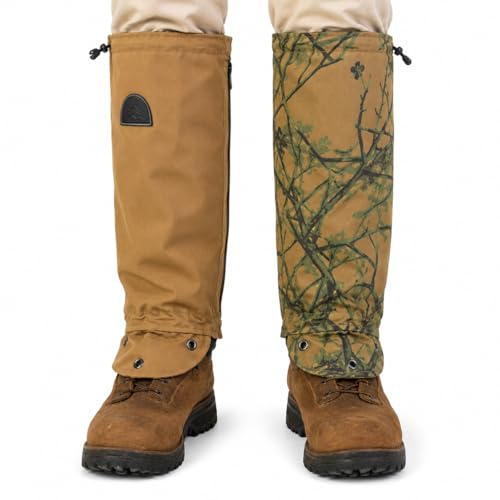
TurtleSkin SnakeArmor
Soft ballistic fiber that does not trap heat against your legs
Check price on Amazon
Texas Has 15 Potentially Dangerous Snake Species
Texas Parks and Wildlife counts over 105 snake species and subspecies in the state, of which 15 are potentially dangerous to people. They are spread across eco-regions that could not be less alike — the humid East Texas Piney Woods at one end, the arid Trans-Pecos at the other — so which snake you are dressing for depends entirely on where you are standing. Arizona Game and Fish, for the record, counts 13 rattlesnake species in that state — more than any other. What Texas has is sheer range, and a great many people working outdoors in it.
Whether you are a rancher checking fence lines in the Panhandle, a hunter stalking whitetails in the Hill Country, a hiker exploring Big Bend, or a homeowner gardening in the suburbs of Dallas or Houston, your legs are in the strike zone. Snake gaiters are not optional in Texas — they are essential personal protective equipment from March through October.
Texas Snake Bite Statistics:
- About 7,000 people are bitten by venomous snakes in the US each year (TPWD)
- On average 1 to 2 people in Texas die of snakebite per year (TPWD)
- Roughly half of all venomous bites are dry — no venom injected (TPWD)
- Bitten? Texas Poison Center Network, 1-800-222-1222 (Texas DSHS)
Western Diamondback — Texas's most dangerous snake
Found in every eco-region except deep East Texas pine woods
Venomous Snakes of Texas
Fifteen of the state’s snake species and subspecies are potentially dangerous, per Texas Parks and Wildlife. Here are the ones you are most likely to meet — or see all fifteen with sizes and ranges.
Western Diamondback Rattlesnake
Very HighLargest and most aggressive Texas rattler. Up to 7 feet long. Found throughout the state except deep East Texas.
Habitat: Dry grassland, rocky hills, brush country
Active: Mar–Oct, active at dawn/dusk
Mojave Rattlesnake
Very HighNeurotoxic venom is among the most dangerous in North America. Smaller but deadlier than the Diamondback.
Habitat: West Texas deserts, especially Trans-Pecos
Active: Apr–Oct, night-active in summer
Cottonmouth (Water Moccasin)
HighAggressive when threatened. Found in every county east of the Pecos. Often mistaken for harmless water snakes.
Habitat: Rivers, lakes, marshes, rice fields, stock ponds
Active: Mar–Nov, active day and night
Copperhead
HighCauses the most bites in Texas due to camouflage. Often stepped on before being seen. Found in wooded and rocky areas.
Habitat: East Texas woods, Hill Country rocky outcrops
Active: Apr–Oct, most active after rain
Coral Snake
ModerateShy and rarely bites, but venom is highly neurotoxic. Red-yellow-black banding distinguishes from mimics.
Habitat: East Texas pine forests, coastal plains
Active: Mar–Oct, fossorial habits
Massasauga Rattlesnake
ModerateSmall rattler of the Panhandle plains. Populations declining due to habitat loss. Potent venom for its size.
Habitat: Shortgrass prairie, sandhills of the Panhandle
Active: Apr–Sep, crepuscular
Black-Tailed Rattlesnake
ModerateFound in the Big Bend and Davis Mountains. Less aggressive than the Western Diamondback.
Habitat: Mountain foothills, desert scrub, canyons
Active: Apr–Oct
Best Snake Gaiters for Texas Conditions
Texas demands gaiters that handle extreme heat, rocky terrain, thorny brush, and the constant threat of Western Diamondbacks. These picks are selected for Lone Star State conditions.
Best for Texas Heat
TurtleSkin SnakeArmor
at under 6 oz per gaiter, TurtleSkin is the ultimate choice for Texas heat. The soft ballistic fiber does not trap heat against your legs, and the breathable backing allows air circulation even at 100°F. The flat profile is comfortable under brush chaps or hunting bibs. The maker states the weave is tested against Western Diamondback fangs.
- Only under 6 oz — barely noticeable in Texas heat
- Breathable backing for 100°F days
- Soft shell fits under chaps and bibs
- Made in USA
Best for Ranch & Farm
GearOZ Snake Gaiters
GearOZ is built for the abuse Texas ranchers dish out. The 900D Oxford fabric with ripstop reinforcement shrugs off mesquite thorns, barbed wire, and rough limestone. Wide calf adjustment fits over cowboy boots and thick socks.
- 900D Oxford resists mesquite thorns and wire
- 18-inch height for tall grass protection
- Fits over cowboy and muck boots
Best Budget for Texas
ZHZ Snake Gaiters
ZHZ delivers solid protection for Texas weekend warriors at this price. The polycarbonate panels handle the limestone rocks and mesquite of the Hill Country, and the nylon shell sheds light rain during those sudden Texas thunderstorms. Keep a pair in your truck for impromptu hunting or hiking trips.
- Budget-friendly — keep a backup pair
- Polycarbonate handles rocky terrain
- Quick on/off for impromptu trips
- Compact for truck glove box storage
Snake Risk Across Texas Eco-Regions
Texas is massive. Snake risk and species vary dramatically depending on where you are. Here is the breakdown by region.
Panhandle & Rolling Plains
Very HighSpecies: Western Diamondbacks, Massasaugas
Active: Apr–Oct, peak May–Jun
Shortgrass prairie and sandhills are prime rattlesnake territory. Prairie dog towns draw snakes.
Hill Country
Very HighSpecies: Western Diamondbacks, Copperheads
Active: Mar–Nov
Rocky limestone outcrops and cedar brakes are ideal rattler habitat. Tubing and hiking trails see frequent encounters.
Trans-Pecos (West Texas)
Very HighSpecies: Mojave, Western Diamondbacks, Black-Tailed
Active: Apr–Oct
Desert terrain with the highest Mojave rattler concentration in the US. Night hiking is especially risky.
South Texas Brush Country
HighSpecies: Western Diamondbacks, Coral Snakes
Active: Year-round
Dense thorn scrub provides perfect cover. Nearly year-round snake activity due to mild winters.
East Texas Piney Woods
HighSpecies: Copperheads, Cottonmouths, Coral Snakes
Active: Mar–Nov
Wet, wooded terrain is Cottonmouth paradise. Copperheads are nearly invisible in leaf litter.
Gulf Coast
HighSpecies: Cottonmouths, Copperheads
Active: Mar–Nov
Marshes, rice fields, and coastal prairies host large Cottonmouth populations. Fishing and duck hunting are high-risk.
Texas Snake Safety Resources
Stay informed with official state resources on venomous snakes and bite prevention.
Texas Parks & Wildlife
Official field guide to all Texas snakes, venomous and harmless, with identification tips.
Texas DSHS Venomous Snake Info
State health department data on snake bite treatment, antivenom availability, and prevention.
CDC Snake Bite Prevention
National CDC guidelines for snake bite first aid, workplace safety, and outdoor prevention.
Texas Snake Gaiter Questions
What snakes are most dangerous in Texas?
The Western Diamondback Rattlesnake is the most dangerous due to size, aggression, and potent venom. Cottonmouths (water moccasins) are the second most common biter, especially near water. Copperheads are widespread in East Texas and the Hill Country and cause the most bites due to their excellent camouflage.
When is snake season in Texas?
Snakes are active from March through October in Texas. Peak activity occurs from April to June and again in September and October. Even in winter, rattlesnakes may emerge during warm spells. South Texas sees nearly year-round activity due to mild winters.
Do I need snake gaiters for Texas hunting?
Yes — dove hunting in the Panhandle, deer hunting in the Hill Country, and hog hunting in South Texas all put you in prime rattlesnake habitat. The dry grass, brush piles, and rocky terrain are exactly where Western Diamondbacks and Mojave rattlers shelter.
Are snake gaiters hot to wear in Texas heat?
Quality gaiters with breathable backing and ventilation channels are manageable even in Texas summer heat. TurtleSkin SnakeArmor at under 6 oz is barely noticeable. Avoid thick, non-breathable gaiters in Texas — heat exhaustion is a bigger risk than a snake bite if you overheat.
What part of Texas has the most snakes?
The Texas Panhandle and Trans-Pecos region (West Texas) have the highest concentration of rattlesnakes. The Hill Country and South Texas also rank high due to rocky terrain and brush. East Texas has more Cottonmouths and Copperheads in wetter, wooded areas.
Protect Yourself in Snake Country
In Texas, the question is not if you will encounter a venomous snake — it is when. The right gaiters turn a potentially deadly encounter into a story you tell at the campfire.
Snake activity data sourced from Texas Parks and Wildlife Department and CDC venomous bite reports 2024.